Authentic Font: A Guide to Elegant Script Typography
In the crowded world of digital design, finding a typeface that balances expressiveness with professionalism can feel like searching for a needle in a haystack. Authentic enters the scene not just as another script font, but as a refined tool designed to inject a human touch into modern projects. It is a delicate, flowing typeface that captures the essence of sophisticated handwriting without sacrificing legibility. For designers, marketers, and creators, this font represents a bridge between the warmth of personal touch and the clarity required for effective communication.
The Visual Character of Authentic
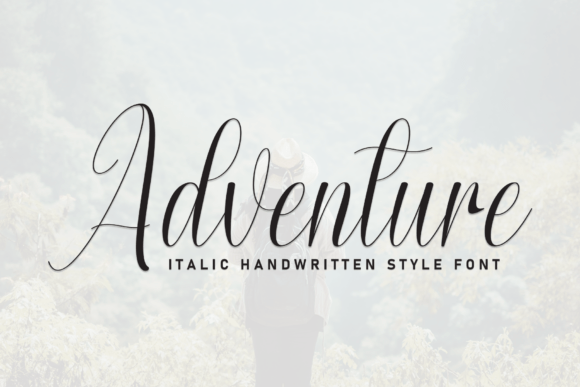
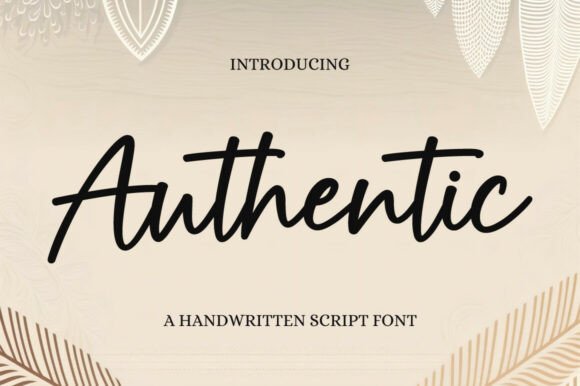
At its core, Authentic is defined by its fluidity. Unlike rigid geometric typefaces or overly chaotic grunge scripts, this font strikes a balance. The letterforms feature gentle curves and subtle connections between characters, mimicking the natural rhythm of a hand holding a brush or pen. It avoids the jagged edges often found in distressed fonts, opting instead for clean, smooth strokes that feel organic yet polished.
The visual weight of Authentic is generally light to medium, making it airy and approachable. It possesses a high x-height relative to its ascenders and descenders, which contributes to its excellent readability even at smaller sizes. The swashes and tails are elegant but restrained, ensuring that the font adds flair without becoming illegible. It is a prime example of a premium font that understands its role: to enhance the message, not overpower it. When you look at a paragraph set in Authentic, you see a cohesive texture that feels inviting and warm, rather than a collection of disconnected symbols.
Strategic Applications: Where Authentic Shines
Understanding where to deploy a script font is just as important as selecting the font itself. Authentic is incredibly versatile, but it excels in specific contexts where emotional connection and aesthetic appeal are paramount.
Wedding and Event Stationery
The most immediate application for a font like Authentic is in the world of nuptials. Wedding invitations, RSVP cards, and menu designs rely heavily on typography that conveys romance and elegance. Authentic serves as a perfect hero font for names and headers, paired with a clean sans serif font for the details. Its delicate nature ensures that the invitation feels formal yet personal, setting the right tone for the event.
Branding and Logo Design
For businesses in the lifestyle, beauty, fashion, or artisanal food sectors, Authentic can be a cornerstone of brand identity. A logo utilizing this typeface immediately communicates a sense of craftsmanship and care. It works beautifully for boutique bakeries, high-end salons, or handmade jewelry brands. However, designers must ensure that the font remains legible when scaled down for favicons or social media profile pictures. In logo design, the swashes of Authentic can be manipulated to create unique ligatures that make the brand mark stand out.
Digital Presence and Social Media
In the realm of web design and social media graphics, attention spans are short. A font like Authentic can be used to create eye-catching Instagram quotes, Pinterest pins, or YouTube thumbnails. It provides a necessary visual break from the standard block text used in captions. For bloggers and content creators, using Authentic for pull quotes or section headers adds a layer of editorial sophistication that elevates the perceived value of the content.
The Psychology of Typography and Brand Perception
Typography is rarely just about aesthetics; it is about psychology. The fonts we choose influence how an audience perceives a brand before they even read a word of copy. Authentic projects a personality that is trustworthy, intimate, and refined. By using this font, a brand signals that it values quality and attention to detail.
Consider the concept of visual hierarchy. In a marketing brochure or a landing page, you need to guide the reader’s eye. Authentic is an excellent choice for headlines or sub-headlines because its distinct style draws the eye immediately. However, because it is a script font, it should rarely be used for long body copy. The goal is to use it to accentuate key messages—such as a call to action or a special offer—while relying on a sturdy serif font or sans serif font for the heavy lifting of information delivery.
Consistency is another pillar of professional design. When you use Authentic across your packaging design, business cards, and website headers, you create a recognizable thread that ties the brand experience together. This consistency builds trust. When a customer sees the familiar loops and strokes of Authentic, they immediately associate it with the brand's values of elegance and authenticity.
Practical Guide: Pairing and Technical Considerations
Adopting a new typeface requires more than just installation; it requires strategy. Here is how to get the most out of Authentic in your workflow.
Mastering Font Pairing
The success of Authentic often depends on its companion. Because it is a flowing, decorative script, it demands a grounding partner. A geometric sans serif font (like Montserrat or Lato) creates a modern, high-contrast look perfect for tech startups with a human touch or lifestyle magazines. Alternatively, pairing Authentic with a transitional serif font (like Garamond or Baskerville) creates a more traditional, academic feel suited for book covers or high-end editorial design. The key is contrast: let the script be the star, and the supporting typeface be the stage.
Readability and Accessibility
While Authentic is designed to be legible, context matters. Avoid using this font for small legal disclaimers, lengthy technical specifications, or navigation menus. It is best reserved for display sizes—typically 18px and above on screen. When used for web design, ensure there is sufficient line height (leading) to accommodate the ascenders and descenders without crashing into other lines. Good typography is accessible typography; if the text strains the eyes, the design has failed, regardless of how beautiful the font is.
Licensing and Commercial Use
For entrepreneurs and small business owners, understanding the licensing of a commercial font is non-negotiable. Authentic is typically distributed as a premium font, meaning it comes with a license that dictates how it can be used. Usually, a standard license covers usage on websites, social media, and printed materials. However, if you plan to embed the font in an app or use it on a massive number of server-side generated images (like on a POD platform), you may need an extended license. Always review the EULA (End User License Agreement) to ensure your usage is compliant.
Conclusion
Authentic is more than just a collection of glyphs; it is a versatile design asset that bridges the gap between casual handwriting and professional typesetting. Whether you are crafting a wedding invitation, launching a boutique brand, or designing a social media campaign, this font offers the sophistication and warmth needed to connect with your audience. By pairing it wisely and using it strategically, you can leverage Authentic to create designs that are not only visually stunning but also deeply resonant.